Understanding the Mutual Fund Riskometer
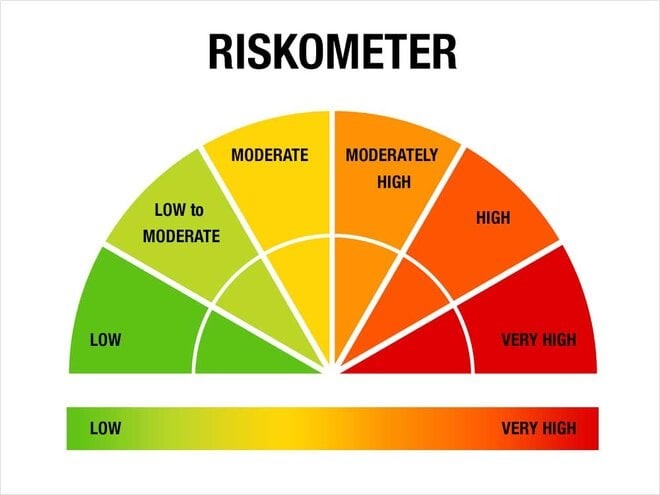
Every mutual fund scheme in India carries a Riskometer — a simple visual tool mandated by the Securities and Exchange Board of India (SEBI) to help investors understand the level of risk involved before they invest. It appears on scheme documents and fact sheets, usually as a dial with a needle pointing to a risk category.
The Riskometer classifies schemes into categories ranging from Low to Very High risk, based on factors such as the asset class, market capitalization focus, credit quality, and volatility of the underlying portfolio. A scheme investing primarily in government securities, for instance, is generally positioned differently from one investing in small-cap equities.
One important feature of the Riskometer is that it isn't static. As a scheme's underlying portfolio evolves, its risk classification can change over time, and asset management companies are required to review and update it periodically. This means the risk label you see today reflects the current portfolio, not a permanent characteristic of the scheme.
The Riskometer is a useful starting point, but it works best alongside your own understanding of your goals, time horizon, and comfort with volatility. Two schemes in the same risk category can still behave quite differently, so the tool is meant to inform your decision, not replace a closer look at the scheme's actual strategy and documents.
For investors, checking the Riskometer before investing — and periodically afterward — is a simple habit that adds a layer of clarity to portfolio decisions. It won't tell you whether a scheme is right for you, but it does help set realistic expectations about the nature of risk you're taking on.
Talk to a Finglow expert in Greater Noida to understand how a scheme's risk category fits into your overall portfolio.